
Introduction
The world of calligraphy is beautiful, rich, and incredibly rewarding. But for a beginner, the sheer number of pens, inks, and paper types can be overwhelming. Before you even attempt your first flourish, you need to set yourself up for success. This post breaks down the absolute essentials you need to start your calligraphy journey today.
1. The Right Pen: Dip Pen vs. Fountain Pen
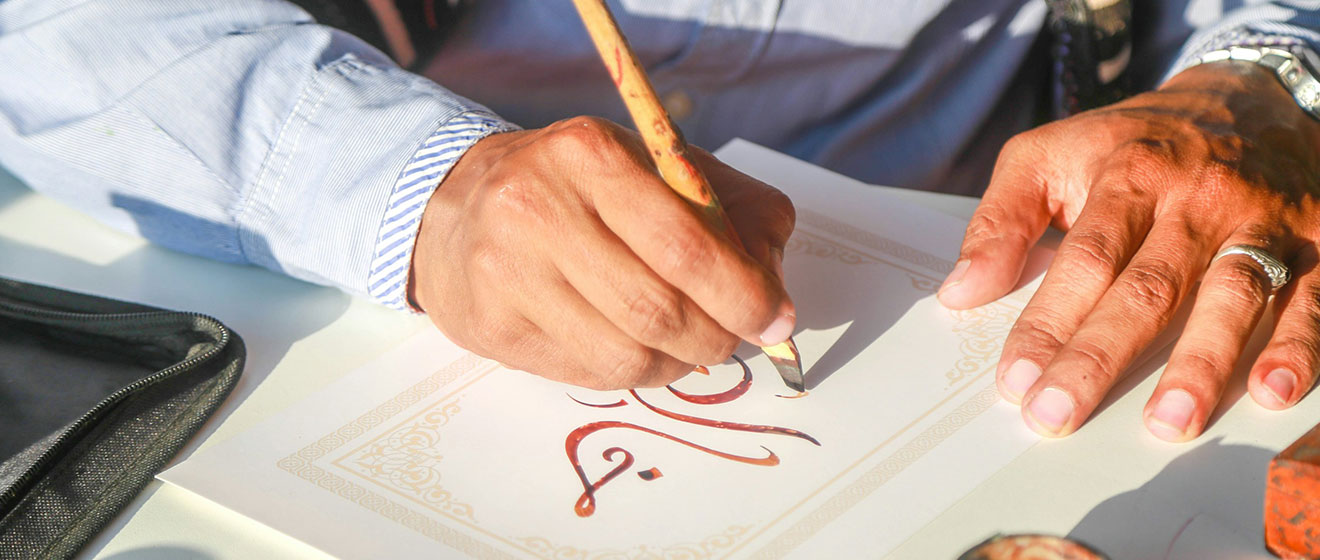
For traditional and modern pointed-pen calligraphy, you’ll need a dip pen.
- The Holder: You have two main types:
- Straight Holder: Looks like a regular pen and is ideal for scripts where the pen is held directly facing the direction of the writing (like Copperplate or some modern scripts).
- Oblique Holder: Features a flange that holds the nib at an angle, making it much easier to achieve the steep slant required for scripts like Spencerian. Start with a straight holder if you’re unsure, but consider an oblique holder early on if you are serious about traditional scripts.
- The Nib: This is the most crucial part, as it determines the line variation. Start with a beginner-friendly pointed nib that is flexible but not too fragile, such as the Nikko G or Zebra G. These are durable and offer excellent thick and thin line contrast.
2. Ink: Quality Matters
Don’t use standard drawing or fountain pen ink in a dip pen, as it’s often too thin. Look for inks specifically designed for calligraphy.
- Black Sumi Ink or Walnut Ink: Excellent choices for beginners. They flow well, dry quickly, and produce beautiful, crisp lines.
- Acrylic Inks: If you want vibrant colors, look for pigmented acrylic calligraphy inks. Tip: Always stir (don’t shake!) metallic or pigmented inks before use.
3. Paper: Smoothness is Key
The wrong paper is the number one source of frustration for beginners. Rough paper fibers can snag your nib, causing ink splatter (known as “blobs”) or inconsistency.
- Vellum/Tracing Paper: A great, inexpensive choice for practice. It’s incredibly smooth and prevents ink bleeding.
- Marker Paper: Also very smooth and often translucent, which allows you to place it over guide sheets for perfect slant and spacing practice.
- High-Quality Cardstock: Once you are comfortable, look for smooth, bleed-proof cardstock (at least 80lb) for final projects.
Pro-Tip: Get Guide Sheets!
Even before you practice a single letter, use guide sheets. These pre-printed sheets show the correct baseline, waistline, ascender, and descender lines, as well as the essential slant line. You can find many free printable guides online that match different script styles.